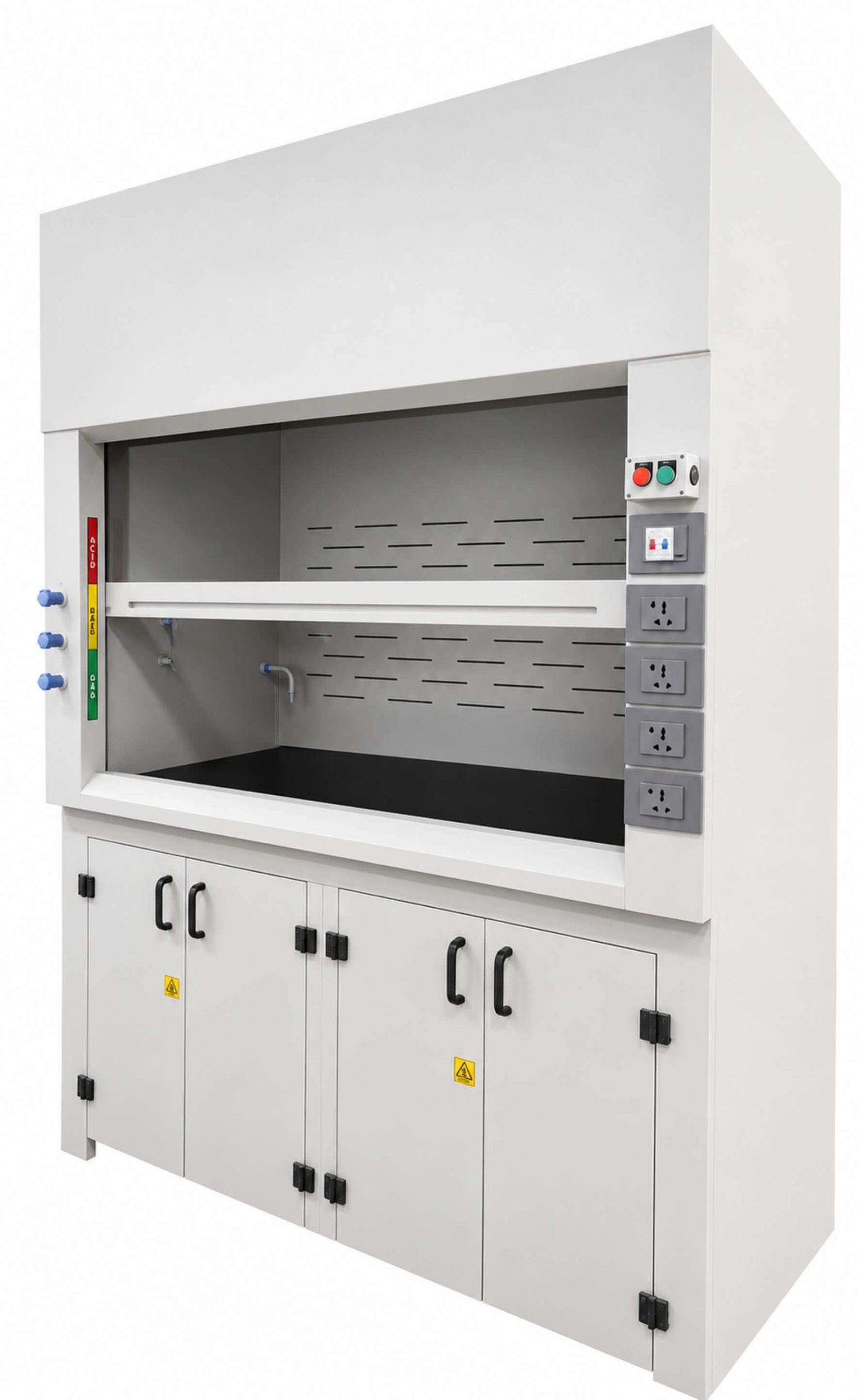
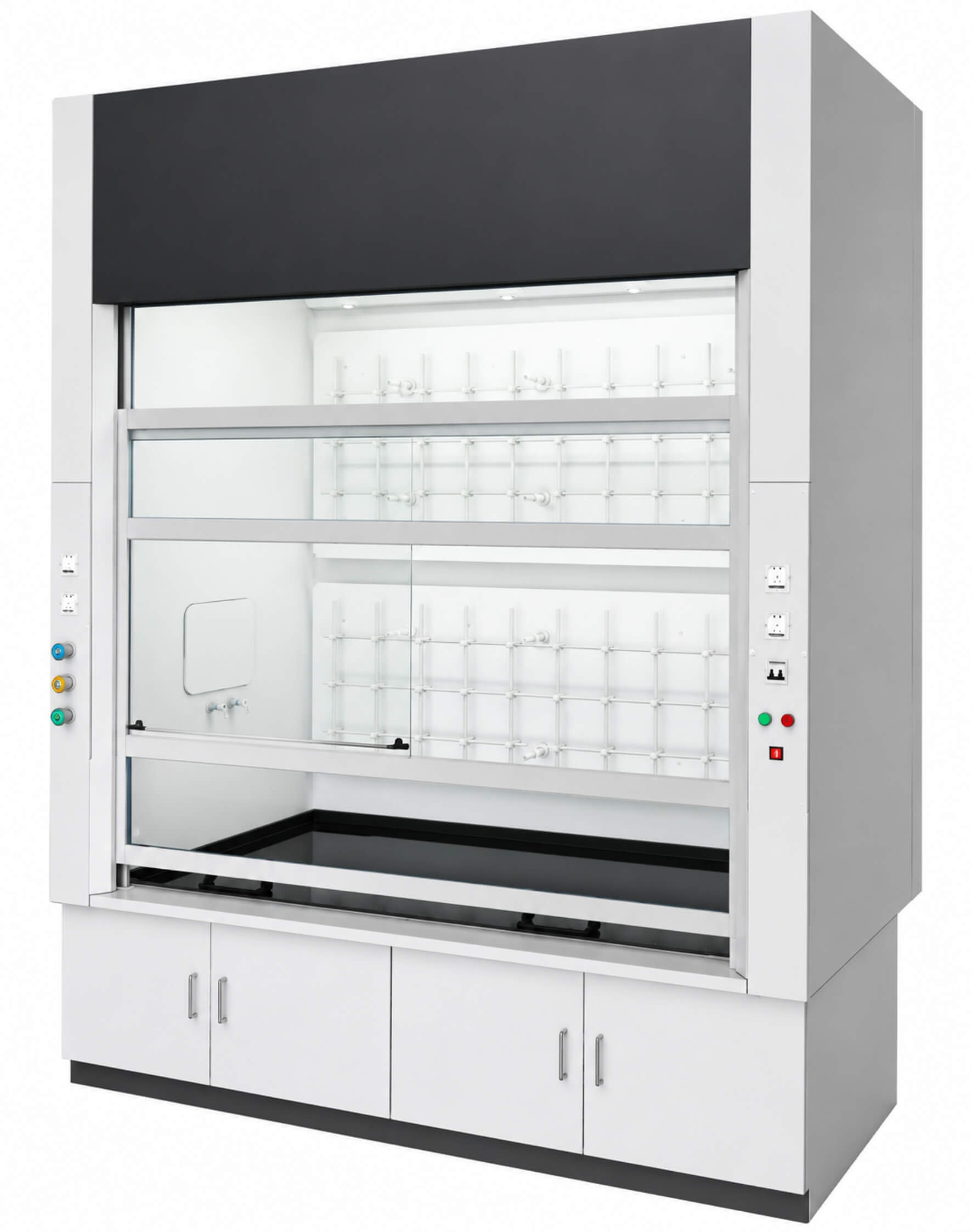
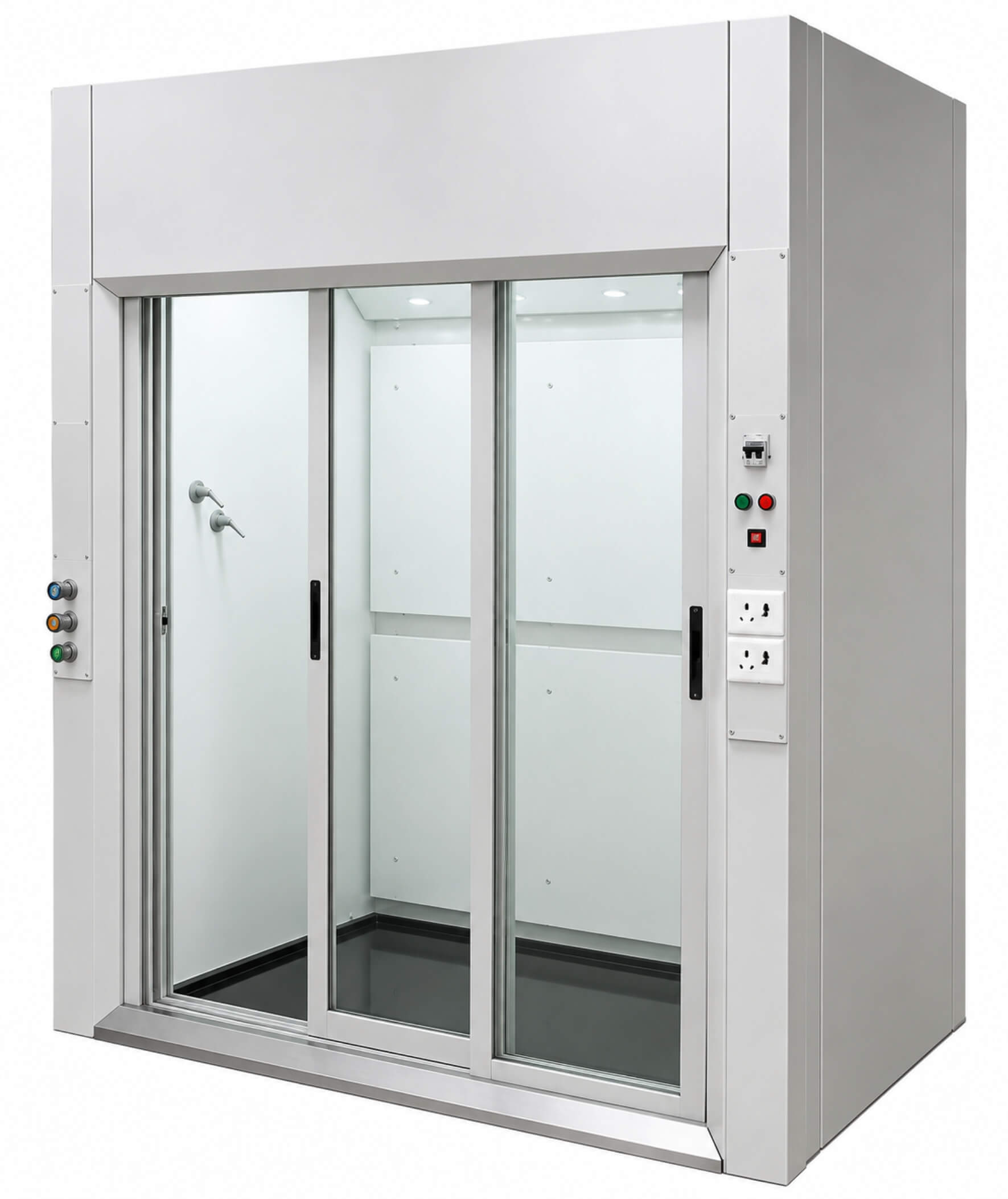
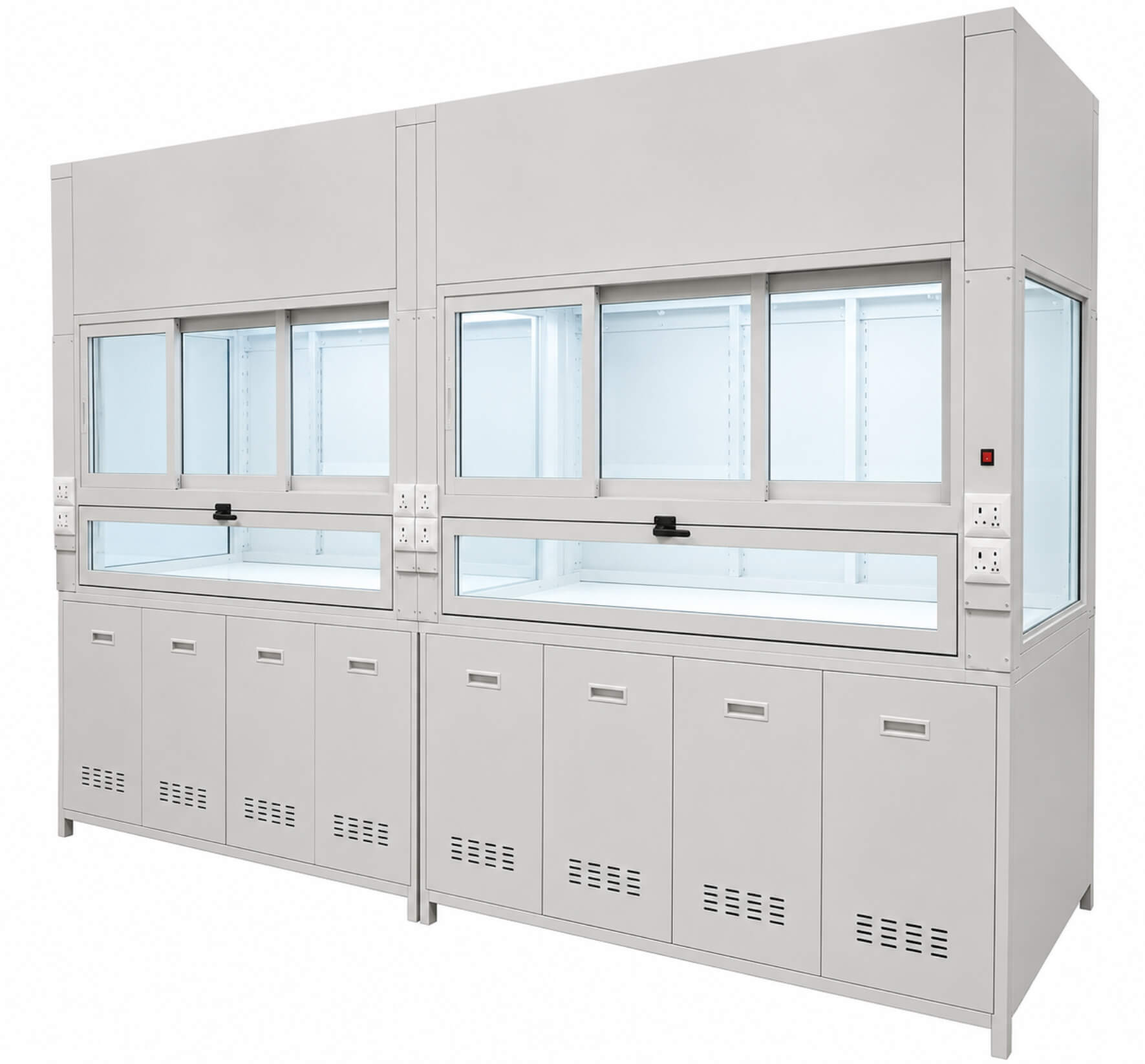
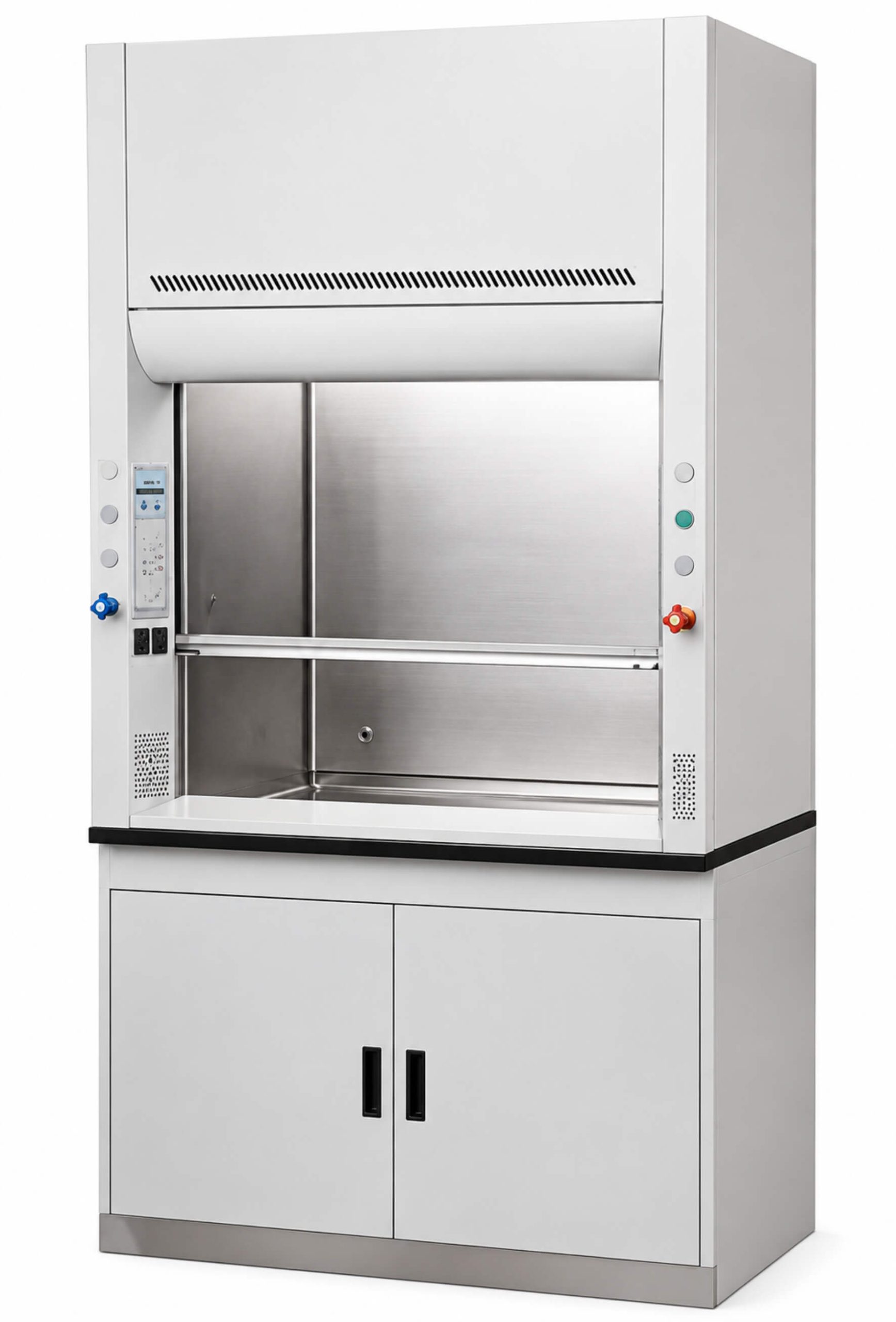
The Chromgate Laboratory Fume Hood is a high-performance laboratory safety enclosure designed to provide effective protection for personnel while handling hazardous chemicals, fumes, vapours, gases, and other airborne contaminants.
Combining efficient airflow management with robust construction, the fume hood is designed to capture, contain, and exhaust airborne contaminants at the source, helping maintain a safer, cleaner, and more controlled laboratory working environment.
The fume hood incorporates an aerodynamically designed work chamber and exhaust arrangement to promote smooth and uniform airflow across the hood opening. During operation, the exhaust system maintains controlled negative pressure within the work chamber, drawing contaminated air away from the operator and discharging it through a suitably designed exhaust ducting and treatment system.
Chromgate Laboratory Fume Hoods can be designed with reference to applicable ASHRAE laboratory fume hood performance practices and relevant occupational safety requirements, subject to the selected configuration, airflow design, installation, and site-specific performance requirements.
Available Materials of Construction (MOC)
Understanding that laboratory applications vary considerably in terms of chemical exposure, corrosion resistance, hygiene, operating conditions, and budget, Chromgate Laboratory Fume Hoods are available in multiple construction options:
- CRCA / Mild Steel (MS) with high-quality chemical-resistant powder-coated finish
- Galvanized Iron (GI) with high-quality chemical-resistant powder-coated finish
- Polypropylene (PP) for applications involving highly corrosive chemicals and fumes
- Specialized Pre-Laminated / Laminated Board Construction for suitable general laboratory applications
- Fire Retardant Grade Construction for applications requiring enhanced resistance to flame spread, subject to the selected material specification
Inner Lining & Worktop Options
To suit different chemical, thermal, mechanical, and hygiene requirements, the fume hood can be provided with a variety of inner chamber lining and worktop materials, including:
Granite | Ceramic | Stainless Steel (SS-304 / SS-316) | Phenolic Resin | Polypropylene (PP)
The appropriate material can be selected according to the chemicals handled, operating temperature, corrosion exposure, cleaning requirements, and intended laboratory application.
Key Features & Benefits
- Designed for effective capture and containment of hazardous fumes, vapours, gases, and airborne contaminants
- Aerodynamically designed work chamber for smooth and controlled airflow
- Negative-pressure operation helps prevent contaminated air from escaping into the laboratory
- Multiple MOC options to suit different chemical environments and applications
- Wide selection of chemically resistant inner linings and worktops
- Robust and corrosion-resistant construction for long service life
- Ergonomically designed working area for convenient laboratory operation
- Provision for integration of water, gas, electrical, drainage, and other laboratory utilities, as required
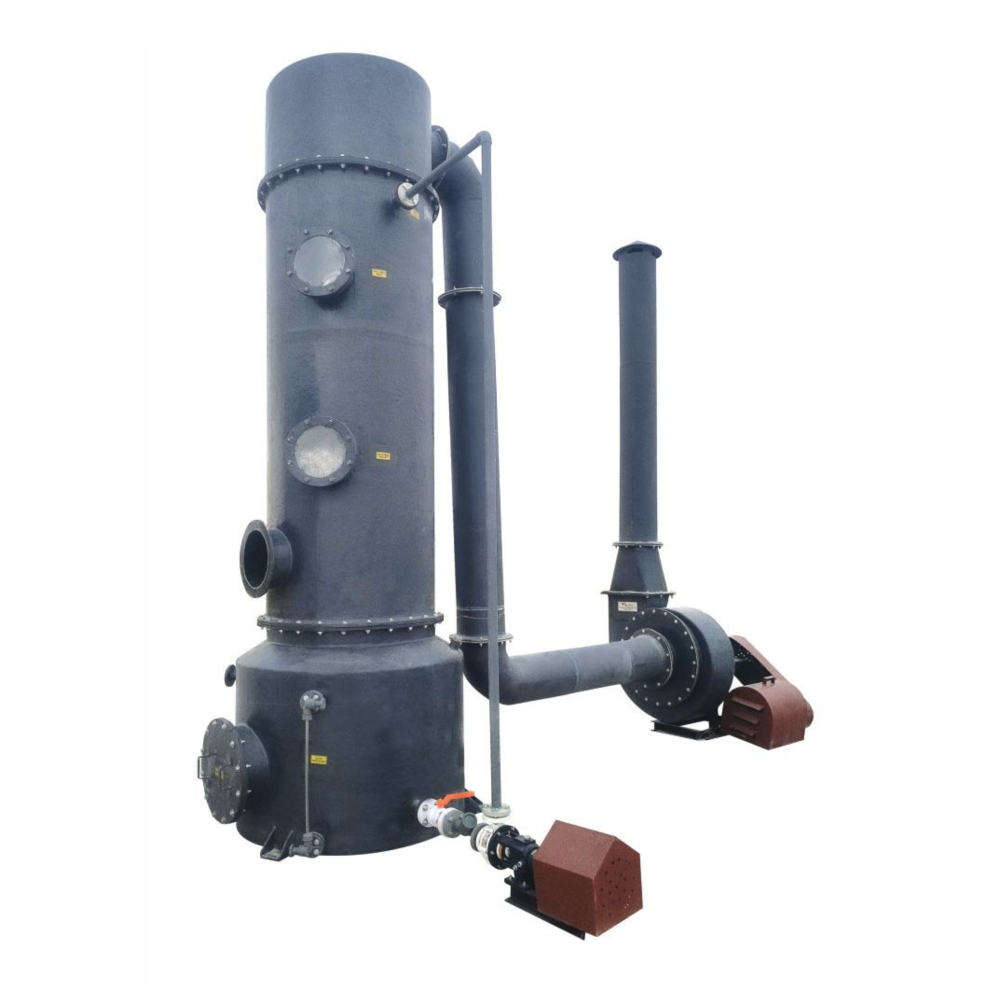
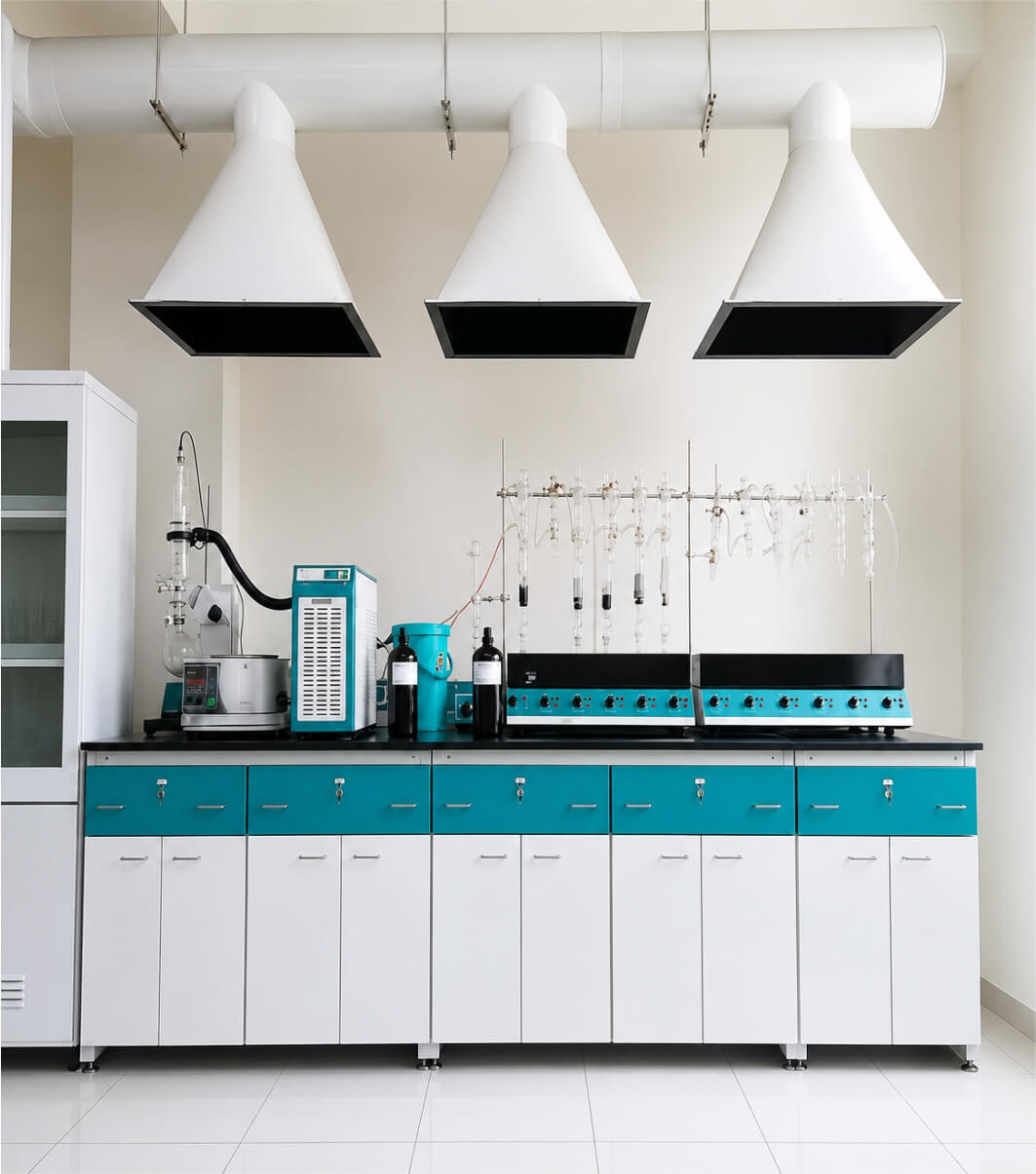
- Suitable for connection to dedicated exhaust blowers, ducting, and scrubber systems
- Available in standard as well as customized dimensions and configurations
- Designed for convenient operation, inspection, cleaning, and maintenance
- Can be integrated with complete laboratory furniture and utility systems
Customization
Chromgate Laboratory Fume Hoods can be customized according to the laboratory layout, application, chemicals handled, required internal working dimensions, material of construction, worktop material, sash configuration, required airflow, exhaust capacity, utility requirements, ducting arrangement, scrubber requirement, and site conditions.
Complete systems can also be offered with exhaust blowers, ducting, dampers, wet/dry scrubbers, utility fittings, sinks, gas outlets, electrical sockets, support structures, and other associated accessories, depending on project requirements.
Note: Fume hood dimensions, MOC, worktop, inner lining, face velocity, exhaust airflow, blower capacity, duct size, utility arrangement, and other technical parameters should be selected according to the intended application, chemicals handled, applicable safety requirements, and final approved project specifications.