
Compare engineered wood vs MS/GI lab furniture and choose the right laboratory furniture solutions for durability, moisture exposure, and long-term value.
Introduction: The Hook
Laboratory furniture decisions shape daily work. They also affect maintenance, replacement cycles, and long-term costs.
Many customers still compare MS/GI lab furniture with engineered wood lab furniture. The choice looks simple at first. One option feels traditional. The other feels newer. Yet the real decision comes down to your lab environment, your workflow, and the level of exposure your furniture must handle.
Chromgate offers laboratory furniture solutions, including workbenches in steel and engineered wood, along with installation, testing, commissioning, and after-sales support. That makes the comparison practical, not theoretical.
Which lab furniture option suits your environment best?
The best choice depends on how your lab works every day. A dry setting has different needs from a lab with frequent water use or chemical fumes.
MS/GI lab furniture has long been used in laboratories. Customers often choose it for its cost-effective position. It can suit many standard lab settings.
Engineered wood lab furniture brings a different profile. It is more suited to modern lab planning, especially when the environment needs stronger resistance to water and pests. It also supports modular layouts, which matters when labs need future changes.
The key question is not only about price. It is about performance over time.
What customers usually compare
Customers often weigh these points first:
- Upfront cost
- Resistance to water exposure
- Resistance to termites and borers
- Suitability for corrosive chemical fumes
- Modular layout needs
- Long-term durability and upkeep
Each of these factors affects how a lab feels after installation. Each also changes the total value over time.
What makes MS/GI lab furniture familiar to many labs?
MS/GI lab furniture remains a common choice because it feels familiar and cost effective. Many customers understand it easily. Many projects also start with this option because of budget planning.
The challenge appears over time. In environments with moisture, breakdown and rusting can become concerns. That can affect appearance, upkeep, and service life.
Laboratories do not run on appearance alone. They need furniture that can support daily use without frequent disruption. When a lab environment brings water, cleaning chemicals, or fumes into the picture, the furniture choice matters even more.
Where MS/GI often fits
MS/GI furniture may fit better when:
- The lab environment is relatively dry
- Budget priority comes first
- The project calls for a traditional approach
- The customer plans around standard utility needs
That said, customers should think beyond the first purchase. A lower initial cost does not always mean lower total cost.
Why does engineered wood appeal to modern laboratories?
Engineered wood is often chosen for long-term value. It costs more upfront than MS/GI in many projects, but customers often see stronger return over time.
One reason is practical. Engineered wood is water resistant. That matters in laboratories where washdowns, spills, or routine moisture exposure can happen.
It is also termite and borer resistant. For many customers, that adds confidence in the furniture’s service life. In contrast, products that face pest-related damage may need more attention over time.
Chromgate also notes FR grade engineered wood as an option. That makes it relevant for industries with labs that face very high exposure to water and corrosive chemical fumes.
Why modularity matters
Engineered wood is not only about finish. It is also modular, much like MS/GI furniture.
That matters because laboratory layouts change. Teams expand. Instruments move. Workflows shift. Modular furniture supports those changes without forcing a full redesign.
For customers planning a new lab or updating an existing one, modularity can reduce future friction. It gives the lab more flexibility as needs evolve.
How do water, chemicals, and pests change the decision?
Laboratory environments are not all the same. Some are relatively controlled. Others face constant exposure to moisture, cleaning, or fumes.
That difference shapes the furniture requirement. A lab with very high water exposure needs a different material choice than a dry quality control room. A lab that handles corrosive chemical fumes also needs a more considered approach.
Engineered wood becomes more attractive in these conditions because of its resistance characteristics. MS/GI furniture may still serve in some settings, but customers should check the environment carefully before choosing it.
Environmental fit matters more than material labels
A material name alone does not tell the full story. The lab use case matters more.
Ask these questions:
- Will the furniture face frequent water exposure?
- Will it sit near corrosive chemical fumes?
- Does the lab need pest resistance?
- Will the layout need to change later?
- Is the customer optimizing for upfront cost or long-term value?
The more demanding the environment, the more the furniture choice must match reality.
The right lab furniture is not just installed, it is matched to the lab’s daily conditions.
Why do many customers see engineered wood as a long-term investment?
Customers often focus on the purchase line item. That is natural. Yet lab furniture supports years of use.
Engineered wood can justify a higher price when the environment demands more from the furniture. Water resistance, termite resistance, borer resistance, FR grade availability, and modularity all add practical value across the life of the lab.
MS/GI furniture remains useful where the conditions are simpler. It can offer an accessible route for many projects. Still, in demanding environments, the cost-effective option at purchase may not stay cost effective for long.
Long-term thinking helps customers plan better. It also helps reduce avoidable replacement cycles and service disruptions.
A simple way to compare the two
Use this comparison framework:
- MS/GI lab furniture
- Traditional option
- Cost effective
- May face rusting and breakdown concerns in some conditions
- Engineered wood lab furniture
- Higher upfront cost
- Water resistant
- Termite and borer resistant
- Available in FR grade
- Modular and suited to modern lab planning
This comparison helps customers decide based on use, not habit.
What should buyers ask before choosing lab furniture?
A good furniture decision starts with operational questions. The product must fit the lab. The lab should not be forced to fit the product.
Customers should review the following before ordering:
1. What is the exposure level?
Water, fumes, and cleaning routines all matter. High exposure pushes the decision toward more resistant solutions.
2. How often will the layout change?
If future changes are likely, modularity matters more.
3. What is the budget horizon?
Short-term budgets and long-term value do not always point to the same choice.
4. What support comes with the project?
Chromgate provides design, manufacturing, installation, commissioning, and after-sales technical support for laboratory solutions. That full-service approach helps customers plan the furniture as part of a complete lab setup.
5. What other lab solutions are part of the project?
Many labs need more than furniture. Chromgate also supplies fume hoods, storage solutions, laboratory exhaust systems, gas handling systems, and accessories. The furniture choice should fit the broader lab environment.
How does Chromgate support complete laboratory planning?
Chromgate does not position lab furniture in isolation. The company provides application-specific and turnkey laboratory solutions for quality control, R&D, educational, pharmaceutical, chemical, food, healthcare, and industrial labs across India.
That matters because furniture selection often connects with other needs. A lab may require:
- Laboratory furniture
- Laboratory fume hoods
- Storage solutions
- Gas handling, purification, and control systems
- Exhaust systems
- Installation and commissioning support
A lab built as one connected system usually works better than one assembled in fragments.
Chromgate’s offer includes stainless steel and engineered wood workbenches, which gives customers more than one route. Each route can match different conditions and project priorities.
Conclusion: Which option should customers choose?
MS/GI and engineered wood both have a place in laboratory planning. The better choice depends on the environment, the budget, and the expected life of the lab.
Choose MS/GI lab furniture when the project needs a traditional, cost-effective option and the conditions are relatively straightforward.
Choose engineered wood lab furniture when the lab faces water exposure, corrosive chemical fumes, termite risk, or a need for modular planning. In those cases, the stronger long-term value can outweigh the higher upfront cost.
The next practical step is simple. Review your lab conditions, then match the furniture solution to those conditions. If you are planning a new lab or upgrading an existing one, contact Chromgate Instruments Private Limited to discuss laboratory furniture solutions, installation support, and turnkey lab planning.
Call-to-Action
Ready to plan a laboratory furniture solution that fits your environment?
Contact Chromgate Instruments Private Limited to discuss engineered wood, MS/GI, and other laboratory solutions for your customer needs.
Related Resources:
- Laboratory furniture solutions
- Fume hood solutions
- Turnkey laboratory project design and engineering
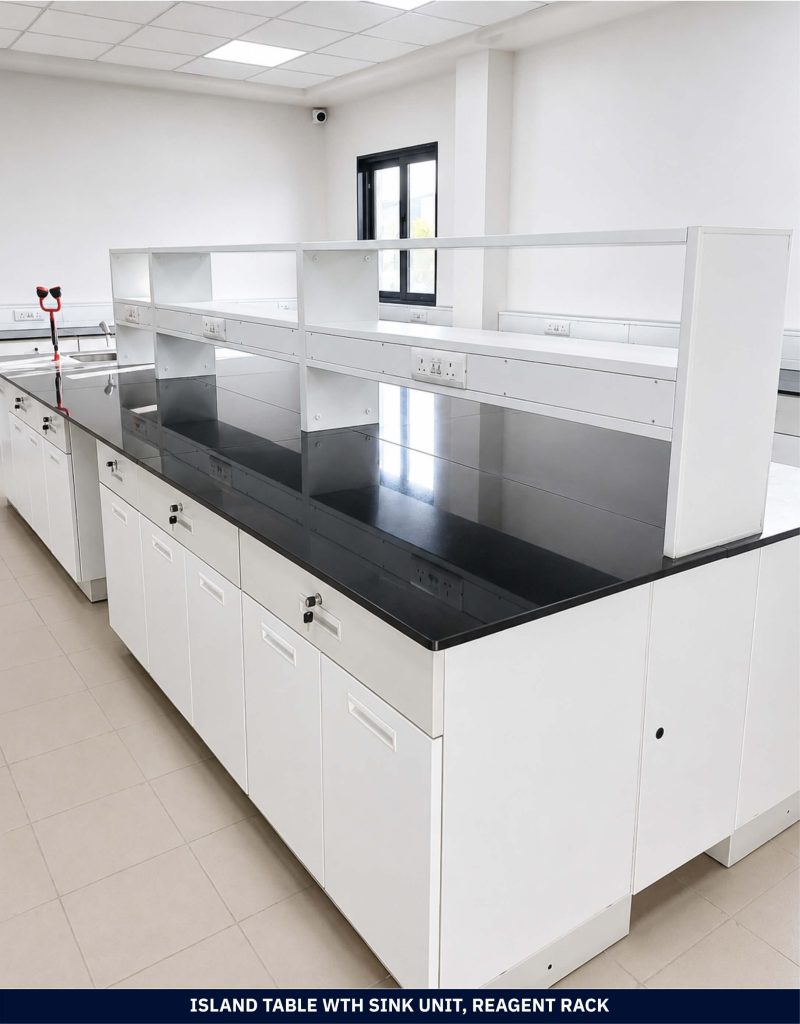
For product images, available configurations and technical specifications, visit:
Link: Laboratory Furniture – Chromgate Instruments
Contact Chromgate Instruments Private Limited to discuss your laboratory furniture requirements, instrument specifications, workspace layout and utility requirements. Our team will help you develop a customized laboratory furniture solution and provide a detailed technical and commercial quotation.